
The Evidence of Providence
Overcoming Apartheid in South Africa to Become an Engineer
By Samuel
👇 Click to translate:
In part two of his memoir, an Apartheid-era South African boilermaker overcomes systemic barriers to earn his Mechanical Engineering diploma, teach at L.C. Johnson College, and pioneer offshore oil engineering.

How does a young man from a racially segregated community in Durban defy an Apartheid system built to limit his dreams? For me, the answer was a leap of faith, a late mentor’s belief, and a relentless drive to become a qualified mechanical engineer in a world designed to keep non-white workers in subordinate roles. This second part of my memoir is a testament to God’s divine providence, the power of perseverance, and the incredible journey from an apprentice boilermaker in South Africa to an international project engineer.
The Call to Pursue Engineering
During the first phase of my apprenticeship at James Brown & Hamer in the Durban Bay area, I spent months learning how to interpret complex technical drawings for pressure vessels, industrial boilers, heat exchangers, storage tanks, and structural steel fabrications. I learned to break down intricate components, identify raw materials and shapes, and schedule my workload efficiently.
By the final eighteen months of my apprenticeship, I was working as a full-fledged boilermaker. Having excelled in my training, I was given the independence to run projects on my own, solidifying the trade secrets and discipline that my mentor, Paul T., had imparted to me. I qualified with top-tier welding certifications for carbon and stainless steel (including the challenging 6G position), and along the way, I developed a genuine passion for structural assembly.
After completing my apprenticeship, I gained experience at several engineering firms before eventually returning to James Brown & Hamer. A couple of years after my return, heartbreak struck when Paul T. passed away. As my wife and I grieved his loss, we decided the best way to honor his legacy was to act on the words he had spoken to me years before: “You are more than a boilermaker. Study further and become an engineer.”
I had already earned my National Certificates at Levels 1, 2, and 3 (N1, N2, and N3) through evening classes at LC Johnson Technical College. However, earning a National Diploma in Mechanical Engineering required completing N4, N5, and N6.
An Unprecedented Leap of Faith
By this time, I was a married man with two young children. Taking evening classes while working full-time would take years, but taking two years off for full-time study presented an immense financial hurdle. The earning potential for a non-white female in South Africa under Apartheid was appallingly restricted, putting immense pressure on my wife. Yet, in a bold moment, I saw God’s hand guiding my steps.
I made an appointment with the college principal, Mr. Ground, and presented a radical proposal: allow me to complete all three advanced courses—N4, N5, and N6—progressively in a single calendar year. It was an accelerated path that had never been attempted at the institution.
Mr. Ground listened carefully and agreed, but with one strict condition: if I failed a single subject, I would immediately be pulled from the accelerated track and demoted to complete the program at the standard pace. I accepted his terms without hesitation.
In December 1983, I took a massive gamble and resigned from my job, walking away from a lucrative training offer as a Project Scheduler—a corporate position almost exclusively reserved for white individuals at the time. My eyes were fixed entirely on becoming an engineer. In January 1984, I immersed myself in my studies. I applied myself with relentless diligence; failure was simply not an option.
By the end of the academic year, I had successfully passed every subject across all three levels, receiving my National Diploma in Mechanical Engineering in early 1985. To top off this accomplishment, I was awarded the College Floating Trophy for Student of the Year—becoming the first student in the college’s history to attempt and complete N4 through N6 in one calendar year.
Systemic Barriers and an Unexpected Calling
Despite my historic academic achievement, entering the corporate workforce as an engineer proved to be a bitter battle. I applied for positions across heavy-duty industrial plants throughout Natal (now KwaZulu-Natal), only to face repeated rejections. High-level engineering positions were still rigidly protected under Apartheid job reservation policies.
Deflated but determined, I soon witnessed God stepping in once again. Mr. Ground called me back to LC Johnson Technical College with an unexpected offer: a full-time position as a technical lecturer. I accepted and began teaching in mid-January 1985. Because of faculty shortages, I stepped up to teach specialized subjects, even taking over the N6 Strength of Materials curriculum when no full-time lecturer was available. I quickly fell in love with teaching and mentoring the next generation of technicians.
Over the next few years, I continued my own education, passing sixteen subjects—many with distinctions—to earn my Technical Teachers’ Diploma. However, systemic prejudice reared its head once more. After Mr. Ground retired, I discovered that his successor had deliberately hidden an official letter nominating me for promotion to Senior Lecturer.
While I was angry at the injustice, I refused to harbor hatred. Shortly thereafter, an unfair administrative incident at the college led me to tender my resignation. The regional Chief Inspector of Education coldly remarked that I would “never amount to anything in the South African education system.”
He did not realize that when one door closes, God opens a far greater one.
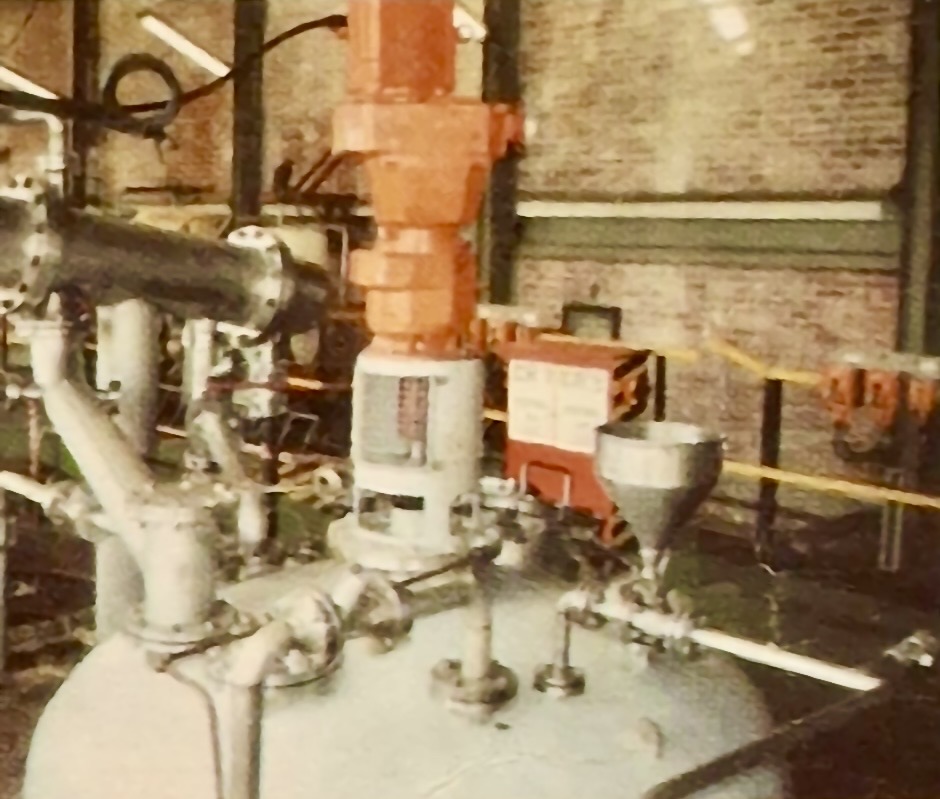
At the time, I was serving as the Managing Director of ArcForce Fabricators (Pty) Ltd. We were commissioned by the AECI Group for a massive undertaking: dismantle their industrial tank farm in Johannesburg, transport the tanks and equipment 350 miles overland to Durban, and build an entirely new processing plant using the salvaged equipment.
The heart of the facility presented a unique engineering hurdle. The original reactor—a glass-lined vessel imported from Germany at an exorbitant cost—could not be moved overland without the road vibration fracturing its delicate interior. That glass lining was essential because the chemicals used in production were extraordinarily corrosive.
We needed a custom replacement. After extensive research into metallurgy, I assured AECI that we could design and fabricate a new ten-ton reactor using 904L grade stainless steel, completely eliminating the need for fragile glass.
Before placing the order for design, manufacturing, and installation, the client approached me with an ambitious request:
“Is there any way your design could reduce our process cycle from sixty hours down to thirty so we can double our production output?”
Without hesitation, I looked at them and said, “No problem.”
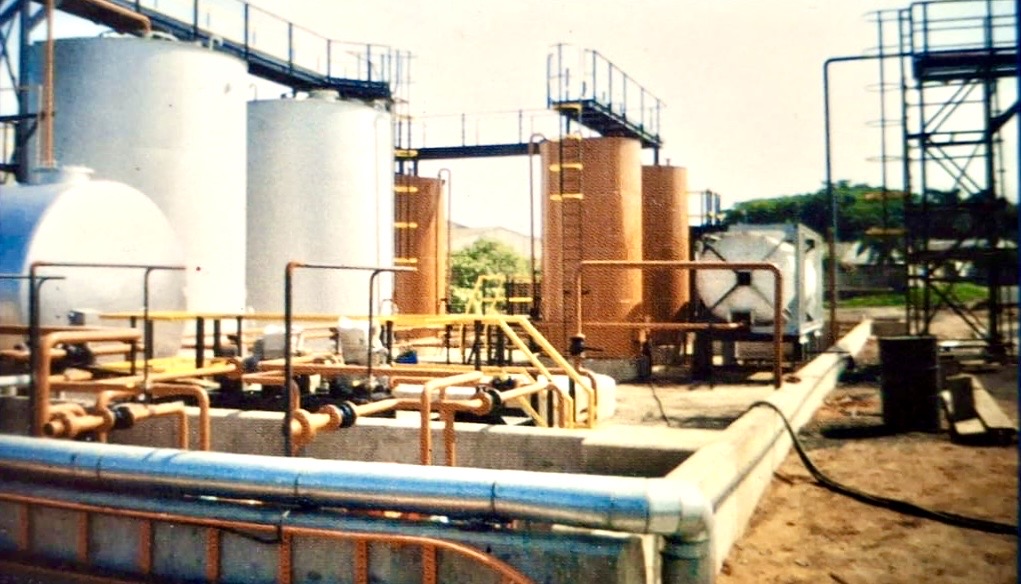
While inspecting a German glass-lined reactor vessel, I noticed a major operational bottleneck. The vessel relied on a single exterior hemi-coil to handle both functions: supplying steam for heating during reaction, followed by cold water for cooling during phase separation. Because steam and cold water cannot occupy the same coil simultaneously, the plant lost substantial time transitioning between the two cycles. Furthermore, the extreme corrosiveness of the processing chemicals was the sole reason for the delicate glass lining in the first place, making any internal modifications risky.
Through research, I discovered that 904L stainless steel could withstand this intense chemical attack. Although it was—and remains—an exceptionally expensive alloy, its durability opened up new design possibilities.
I re-engineered the reactor to completely isolate the heating and cooling loops:
- Cooling Loop: Dedicated the existing exterior hemi-coil exclusively to cold water flow.
- Heating Loop: Installed a new internal double coil, fabricated from 904L stainless steel piping, exclusively for high-pressure steam.
Once the design was approved, the new reactor was fabricated, installed, and commissioned. Just one day after bringing the plant back online, the chief chemist burst into my on-site office, visibly excited, and insisted I follow him to the plant floor. There, he showed me the batch records: using the new reactor design, they had just completed a full production run in only 15 hours—a quarter of the time required by the original setup.
To this day, I consider that redesign one of my finest engineering achievements.
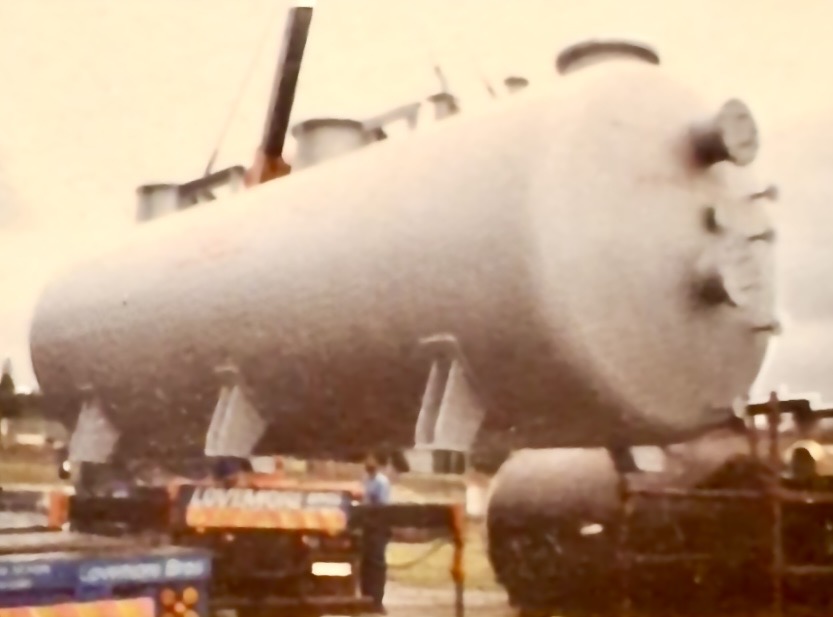
The first-ever pressure vessel I had designed. As the Senior Project Engineer, I had to oversee its construction plus the installation. It was a filtration-type vessel to extract Toleone Oil from water.
Divine Favor in Corporate Engineering
Unshaken, I immediately let industry contacts in Durban know that I was available for high-level engineering roles. Almost overnight, one of the premier engineering firms in Durban invited me to interview for the role of Welding Engineer.
After three rigorous interview rounds, I made the final candidate pool. During the final interview, the managing director—who knew my background—interrupted the proceedings, turned to the panel, and said, “I know Sam very well. I know his work ethic and his technical capabilities.” Looking at me, he added, “Sam, here is my salary offer. No arguments—you are hired immediately.”
I walked out of that building overwhelmed with gratitude. It was a clear demonstration of divine favor opening doors no human policy could shut.
What followed was a rich and rewarding corporate career marked by significant achievements:
- Mossgas Offshore Project: Serving as Quality Assurance Engineer for the massive Mossgas Oil Rig Main Support Frame section, my team brought the complex project to completion in just eight and a half months—far ahead of the projected twelve-month timeline.
- Refinery Excellence: On a major piping project at a Durban oil refinery, our field team achieved a remarkable welding failure rate of just 0.7%, setting a new quality benchmark for the site.
- Professional Recognition: I was inducted as a full member of the South African Institution of Mechanical Engineering (SAIMechE), a professional milestone I credited entirely to God’s guidance.
Solving Complex Challenges in Angola
The pinnacle of my technical career came when I worked in the Angolan offshore oil industry as a Senior Project Engineer for a major American engineering firm.
Their international design team had encountered a severe structural challenge on a new offshore platform installation. For six weeks, senior designers had tried and failed to find a viable solution. Drawing on my foundational trade experience, I proposed utilizing structural “doubler plates”—a traditional engineering method frequently applied in heavy pressure vessel construction.
The head of the engineering design department was astounded by the solution, asking where I had discovered such a “marvelous bit of practical engineering knowledge,” noting it wasn’t documented in any of their standard university textbooks. I smiled, knowing in my heart that it was God-given wisdom built upon years of hands-on discipline.
A New Chapter: Living with Purpose
In recent years, my journey took an unexpected turn when I was diagnosed with Parkinson’s disease. The persistent headaches and vertigo I had experienced were early indicators of this condition. While physical limitations eventually kept me back from field engineering, I have found a meaningful new calling as a writer and blogger.
A close friend recently said to me, “Brother, you were born for a time like this.” His words provided profound comfort, reminding me that our purpose shifts but never ends.
There is a timeless African proverb that says: “If you want to go fast, go alone. If you want to go far, go together.” I intend to go far, and I invite you to walk alongside me as I continue sharing these stories of hope, faith, and victory.
To God be all the glory for His divine providence.
For from him and through him and for him are all things. To him be the glory forever! Amen.
-Romans 11:36
Liked what you read? click below & Share!


In reading this blog now, I can make this statement, thus is not a unique one but is duplicated in the lives of many people all over the world and not only in engineering but in all job descriptions across the working environment. We all have a story to tell.
That is such a profound and absolutely true observation. Thank you for sharing it.
You hit the nail on the head—while my story is personal, the underlying struggles, triumphs, and lessons aren’t unique at all. It’s truly a universal experience that plays out across all job descriptions and all industries, not just engineering.
I completely agree: We all have a story to tell. And often, reading someone else’s story is what helps us recognize the similar chapters in our own lives.
I appreciate you taking the time to read and reflect on that bigger picture! 😊
Thank you so much for your kind and thoughtful comment.
Sharing my personal experience with Parkinson’s disease was a decision I made in the hope that it might offer some clarity, comfort, or encouragement to others facing similar challenges. I truly trust, as you do, that it will be helpful to those who read it.
Your well wishes are deeply appreciated. I hope to continue sharing and being an encouragement to others during this season. Thank you again for reading! 😊