CLICK ABOVE TO LISTEN
Cryptic Tales From the Vault -Part 1
By Samuel
👇 Click to translate:
This is part one of a collection of short stories I have developed or gleaned from items read, and they are well worth sharing with others. I hope you enjoy them as much as I do.
Old Nick’s Jam -Chaos theory in a pint glass
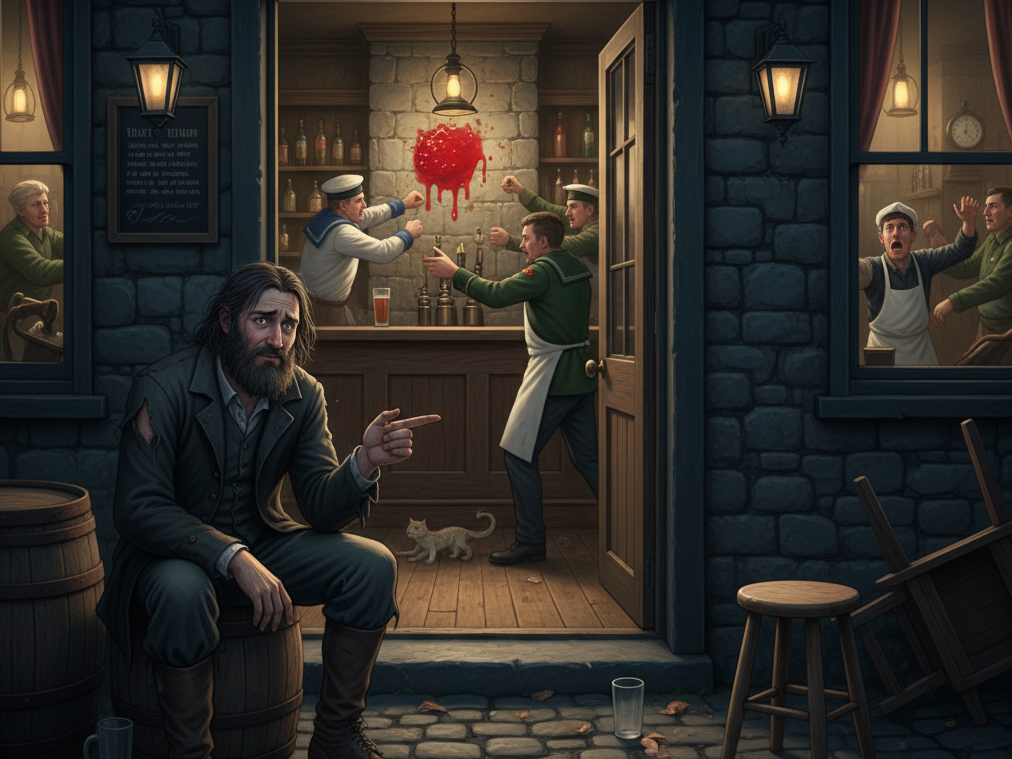
A passer-by noticed Old Nick (the devil) sitting just outside the pub entrance, weeping and complaining. The inquisitive man asked Old Nick, “What ails thee?”
The devil answered, “See that fight going on inside the pub between the Navy and the Army? They blame me for it! All I did was take some jam out of the jar with my finger and placed it on the wall at the back of the bar counter.”
The man responded, “That is so small, how did it create this hullabaloo of a fight?”
Old Nick started to explain, “When I put the jam on the wall, the barman’s pet lizard crawled up to lick and eat it. A Navy cadet’s pet cat jumped out of his hands and sprang on the unsuspecting lizard, killing it instantly. The Army officer’s bulldog then pounced on the cat, killing it. The Navy boys and the Army boys got into a free-for-all, as you are witnessing. The barman blames me, and all I did was put the jam on the wall.”
The 18th Camel -Wisdom of the Oasis
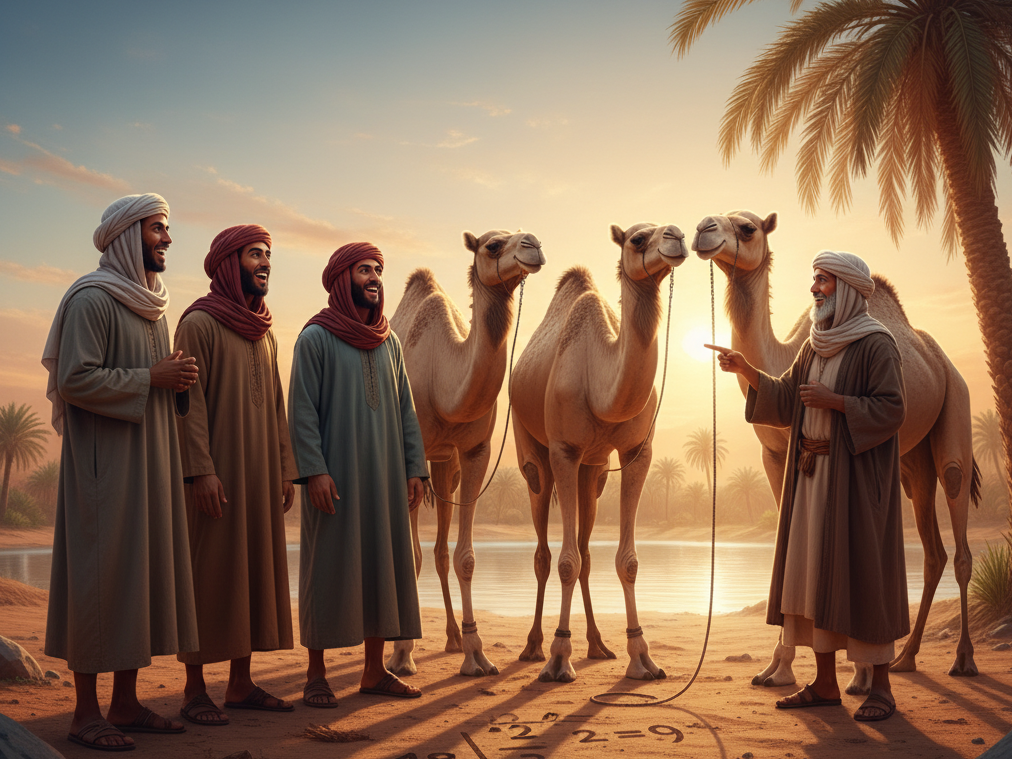
A Bedouin Arab died and left his three sons to share the seventeen camels he owned. In the desert, Arabs counted riches by the number and quality of camels they owned, often treating them as family members. They lived at an oasis in the Sahara Desert, far removed from civilization. His will was specific: Ali, the eldest, was to inherit half of the camels (1/2); Omar, the second eldest, was to inherit one-third (1/3); and Ahsan, the youngest, was to inherit one-ninth (1/9) of the camels.
This division created a major problem. Applying those percentages to seventeen camels meant slaughtering some, an act no Arab would ever wilfully commit. Their task looked like an impossible one, and they spent days and nights searching for a solution.
One evening, a lone traveller stopped at their oasis and was invited in, as was the normal procedure, to have a meal and spend the night in their tent. He was also allowed to refresh his camel at their well. Sitting down to eat, he noticed their drawn faces and lack of mirth and enquired as to what ailed them. When Ali explained their situation, the traveller’s face lit up. “We will solve your and your brothers’ problem tomorrow morning,” he said. “Let us all have a restful sleep tonight.”
Early the following morning, the traveller told them, “Here, take my camel, but keep him separate. You now have eighteen camels. Ali, that means you get nine camels (1/2 of 18). Omar, you get six camels (1/3 of 18). Ahsan, you get two camels (1/9 of 18). Now, each of you take your allotted quantity.” They did so and were surprised to find that nine plus six plus two totalled seventeen. They were ecstatically overjoyed, returned the visitor’s camel, thanked him for helping, and realized just how wise their father was.
Miracle Waters -Three Survivors Find Hope
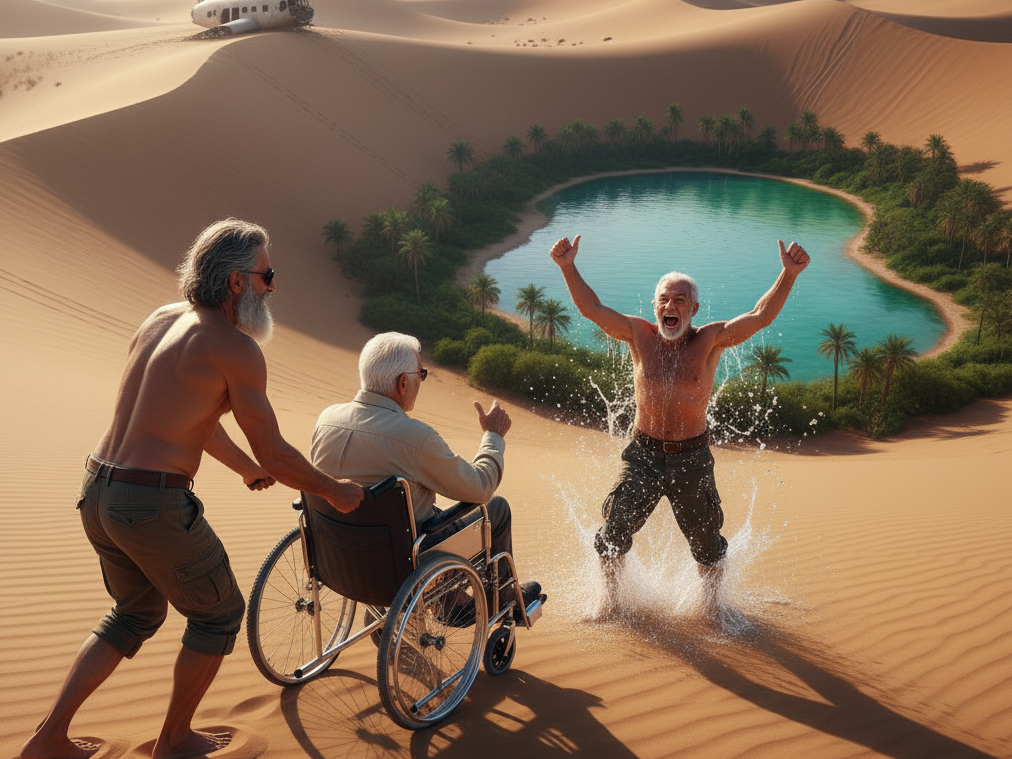
An aeroplane taking a group of old-age pensioners on a holiday trip to South Africa crashed in the Sahara Desert. There were only three survivors: a visually impaired man, a hearing-impaired man, and a paraplegic man who was wheelchair-bound. By a sheer stroke of fortune, the wheelchair was found in the debris. The paraplegic man and the hearing-impaired man explained their situation to the visually impaired man: they were smack bang in the desert with only dunes of sand in every direction. Taking bearings from the sun’s position, they decided to go North in the hope of finding civilization of any form.
For mobility, they devised a plan where the visually impaired man would push the paraplegic man in the wheelchair, and the hearing-impaired man would scout ahead. Communication would be by sign language between the paraplegic man and the hearing-impaired man, with the paraplegic man telling the visually impaired man which way to steer them. This, they felt, was the only working solution for their predicament.
It was rough going, and by the second day, they felt like giving up, with the paraplegic man suggesting they leave him and proceed. The final decision was to continue and not to give up. This paid dividends: not long after, the paraplegic man interpreted the hearing-impaired man’s signs as if he had just gotten to the top of the dune, that there was an oasis at the bottom of the other side of the dune. Game on. The paraplegic man relayed the news, and as the visually impaired man, with renewed vigour, pushed him up the dune in the direction he called out.
Just as they reached the top, the hearing-impaired man got to the edge of the pool in the oasis. Excited, he dived in and as he came up for air, he screamed out, ‘It is miracle water, I can speak!’, splashing away in the water and bringing some to his mouth with his cupped hands, slaking his thirst. By this time, his two friends were almost there. The visually impaired man got there first, dived in, and as his head stuck up out of the water, he also cried out, ‘It is miracle water, I can see clearly!’ The paraplegic man, trying as hard as he could, using his hands, turned the wheels and eventually hit the water, man and wheelchair sinking below the water. Yes, it was miracle water, but in his case, he was still paraplegic, but now in possession of a brand new wheelchair.

Route 66’s Wildest Chase -Farmer Sam’s Fast Ride
Approximately twenty miles outside of Chicago, travelling in a westerly direction on Route 66, was a thriving wheat farm owned by Farmer Sam Brown. His trusted supervisor was an Irishman, Jock o’ Grady, who lived on the farm with his wife and three children.
It was Saturday morning, and Jock was cycling out of the farm gate onto Route 66 to go and do some shopping for his wife in Chicago. He had a saddlebag hanging over the cycle frame and a haversack on his back to carry the items he was going to purchase. Just as he exited the gate, his employer, Sam Brown, was also exiting in his newly acquired Ford Fairlane 500, a powerful V8 engine under the bonnet.
Sam stopped and asked Jock, “Where are you off to, Jock?” Jock replied, “I’m off to town to purchase some items for my wife.”
Sam offered, “I am going there for the day to attend to business matters. To help with the trip, I can tow you to town, but you will need to cycle back. I have a long rope in my car boot. We can tie your bicycle handlebars to one end and the other to my car bumper, and I will tow you the distance to just outside of town, as this kind of towing is not kosher.” Jock accepted the offer, and they made one condition for safe towing: every time Sam’s speed was excessive, Jock would ring his cycle bell, and Sam would reduce his speed.
So, off they went, and this arrangement worked quite well for some time. Sam, in his excitement, started speeding up and, not noticing the feverish bell ringing of Jock, increased his speed. Further up ahead, state troopers had set up a two-station roadblock. At the first station, the equipment would record the speed of the passing vehicles. The trooper manning this station would phone ahead to the second station, informing him of which vehicle to pull over and ticket. A description of the vehicle and the speed recorded would be relayed. This mode of operation had become necessary as the old method of running onto the road to intercept the guilty travellers had resulted in the death of a state trooper.
Sam’s blue Ford shot past, clocking one hundred and twenty miles per hour, and Jock, following, still ringing his bell to gain Sam’s attention. The trooper at the second station received this message: “There’s a blue Ford heading your way speeding at 120 M.P.H., and ignore him. There’s a madman on a bicycle chasing him and ringing his bell to overtake, stop him and ticket him.”
Look out for Part Two next week!
Liked what you read? click below & Share!